
Type of Scaffolding
Safety Begins with the Right Type of Scaffolding
Choosing the proper scaffolding system is the first step toward safe and reliable temporary works. Well-designed and properly installed scaffolds provide stability, accessibility, and protection for workers at height.
1) Steel Pipe Scaffolding
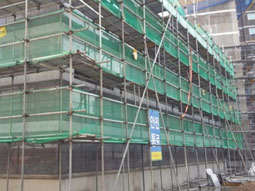
Steel Pipe Scaffolding is a traditional and highly flexible system composed of steel tubes and various fittings. It can be assembled into different shapes and heights, making it ideal for complex structures and irregular surfaces. With its strong load-bearing capacity and durable structure, this type of scaffolding ensures stability and safety in demanding environments.
Key Features : Flexibility • High Strength • Wide Applicability
2) System Scaffolding(Modular Type)
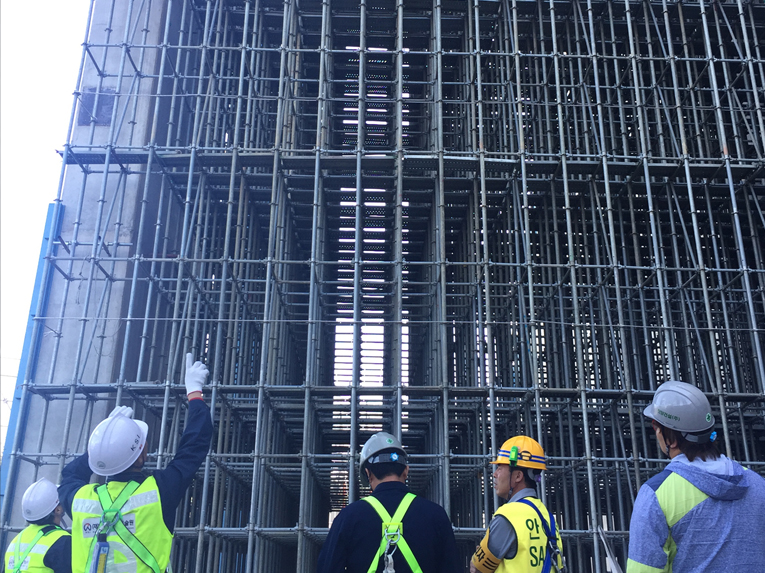
System Scaffolding is a modular structure installed by assembling individual members such as Standards, Ledgers, Braces, and Adjustable Base Plates. This system ensures accurate alignment and strong structural stability through its standardized connections. It provides high safety, efficiency, and consistency, making it widely used in power plants, industrial facilities, and large-scale construction projects.
Key Features : Safety • Efficiency • Structural Precision
3) Movable Scaffolding(Mobile Type)
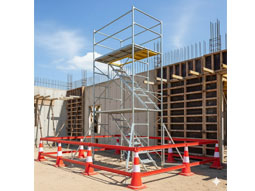
Movable Scaffolding is a lightweight structure mounted on wheels or casters, allowing easy movement between work areas. It is mainly used for indoor tasks such as painting, electrical installation, and ceiling works. With its simple assembly and mobility, this type of scaffolding improves work efficiency and convenience in confined or frequently changing work spaces.
Key Features : Mobility • Convenience • Efficiency
4) Bracket Scaffolding
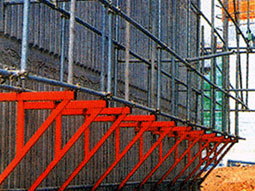
Bracket Scaffolding is installed by attaching brackets or supports directly to the building structure. This system is mainly used when ground space is limited or installation from the ground is not feasible, such as on bridges, tanks, or high-rise building facades. It provides stable working platforms while maintaining clear ground access and efficient use of space.
Key Features : Space Efficiency • Stability • Structural Integration
5) Suspended Scaffolding
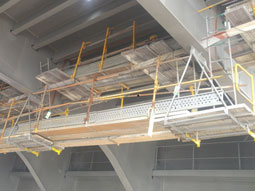
Suspended Scaffolding consists of a working platform suspended from the roof or upper structure using wire ropes or chains. It provides safe and convenient access to high-rise building facades for maintenance, cleaning, and exterior finishing works. This system allows vertical movement of the platform, ensuring both work efficiency and space-saving installation in urban or confined areas.
Key Features : Height Accessibility • Efficiency • Space Saving
6) Hanging Scaffolding
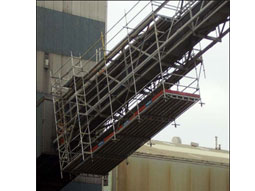
Hanging Scaffolding is a fixed-type platform supported by brackets or beams anchored directly to the building or structure. Unlike suspended scaffolding, it does not move vertically but provides a stable working space where ground installation is difficult or restricted. It is commonly used in bridge, tank, and high-rise façade works, ensuring safety and accessibility in confined areas.
Key Features : Fixed Platform • Stability • Space Efficiency
7) Formwork Integral Scaffolding
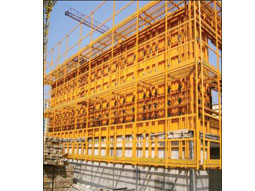
Formwork-Integral Scaffolding combines formwork and scaffolding functions into a single integrated system. It is used to support both the concrete structure and the working platform simultaneously, ensuring efficiency and structural stability during casting operations. This system is particularly effective for bridges, tunnels, and vertical concrete structures, where both support and access are required.
Key Features : Integration • Strength • Efficiency
-
Headquarters:Daerimdongsan-gil 83, Gongdo-uep, Anseung –si, Gyeonggi-do, Korea
Daejeon Office:Jookdong-ro 297 Beon-gil 46, Yusung-gu, Daejeon, Korea
Seoul Office:Room A-205, Jeongeui-ro 7-gil, 13, Songpa-gu, Seoul, Korea
Busan Office :Daejeo-ro 155 Beon-gil 38, Gangseo-gu, Busan, Korea -
Email:happy1@eksi.or.krTelephone:(+82)1600-6323Operating Hours:8:00 to 17:00 on weekdays (closed on Saturdays, Sundays and holidays)
- Copyright(c) Korea Scaffolding Institution. All Rights Reserved.

 한국어
한국어